GurtGamer


Forum Videos Wallpapers Our YouTube Channel Home Image Map
Monday, July 5, 2010

Robot Arena 2


Robot Arena 2: Design and Destroy is a robot action game developed by Gabriel Entertainment, the company that also made the first game and also the company that's infamous for making six games in the John Deere series. The game was released in February 2003 on PC.

As you can guess by the title you have to create a robot and destroy your opponents in the arena. You can also pick one of the standard robots but these robots are very weak, and thus it's very hard to win the tournaments with these ones. However, if you're able to build one yourself with strong weapons like our robot in the video the singleplayer tournaments are very easy. The only problem is finding out how to build a robot that actually works. But when you discover that you'll have a lot of fun with this game. The game offers a lot of customization and freedom when looking at other games of that period.

In this game you play in seasons, and in each season there are nine tournaments. In each of these tournaments you have to win four 1vs1 battles or two battles against three other robots (these are mostly king of the hill battles, get on top of the plateau and keep the other robots away to achieve points, or you can just destroy them all, that also works fine). There are four ways to defeat your opponent: Destroying his robot, immobilize his robot (can be done by destroying his wheels) eliminating his robot (push him in a pit) or when you've achieved the most points in battle (just smash up the other robots) after the time has expired. For each victory you gain points, and when you have the most points after you've played the nine tournaments, you win the season. There are 15 AI teams, each with three different robots. One in each weight class: Lightweight, middleweight and heavyweight. Unfortunately the AI teams are very weak and it's easy to win these tournaments, there is only one robot that is quite hard, and that's the third opponent in the video below.

The graphics of this game have been improved in comparison with the first game, as expected. The arena levels look great, and they didn't forget to put the traps in the game, something that really has to be in a robot battle game. Some of the traps are: spikes, saws, sledgehammers and launch plateau's. There is no ingame music, only in the main menu. A fun sound effect that they've put in is the announcement voice before the battle commences.

This game also has a multiplayer option, but the servers have been shut down two years ago. There is only one forum that's still standing. Their name is GameTechMods, in case you're interested.

The game has some compatibility problems with the latest operating systems, but it's still playable. It's a fun game to unwind after a day of stress. In conclusion: It's quite a fun game, but unfortunately it's a little bit to easy.

Monday, June 28, 2010

Delta Force: Black Hawk Down

Delta Force: Black Hawk Down is a First Person Shooter set during the United Nations intervention in the Somali Civil War. The game was developed by NovaLogic and was released on PC (Windows 2003, Mac 2004), Playstation 2 (2005) and Xbox (2006). This is the sixth game in the Delta Force series. The game also got an expansion on Windows and Playstation 2 called Team Sabre, which featured two extra campaigns, one takes place in Colombia and the other one takes place in Iran.

The player begins the game as a soldier attached to the 10th Mountain Division, taking part in Operation Restore Hope; part of the United Nations-backed humanitarian effort to end the famine in Somalia which had killed 300,000 civilians. Following the third mission, the player assumes the role of a soldier assigned to Task Force Ranger, taking part in Operation Gothic Serpent, a military operation conducted during the Battle of Mogadishu on October 3, 1993. During the latter section of the game, the player controls members of the 3rd Ranger Battalion and 1st Special Forces Operational Detachment-Delta, commonly known as Delta Force.

The game is based on the 1992-93 UN peace missions in war-torn Somalia. The first few missions in the game are designed to make the player accustomed with the different types of weapons, their usage, enemy AI, (which is kind of stupid, when playing this game it looks like they're deaf, since they don't react when you fire a shot at them. They only react when they actually see you) terrain types and combat techniques. The majority of the missions involve convoy protection, providing security for food distributions, destroying weapon stockpiles, taking prisoners, etc.

The fans of Delta Force know that the earlier games in the series were very hard, but this game has been made a lot easier. In the earlier games one hit sometimes was enough to get killed, but here you can take three-five hits. You're also able to find health packs which heal you completely. Another thing that also has changed is that your freedom is limited, the maps in this game aren't that open as the maps in earlier games. Most of the time you are flown in by chopper and it all happens automatically, you only have to wait until it lands and listen to some instructions. You can also use a limited amount of quick saves which also makes the game much easier than its predecessors.

The graphics of the game aren't that special, but to be fair they have been improved compared to the earlier games in the series. Especially in the city levels you can see that the creators have put some time in the graphics. However, the desert levels mostly are very gray and bare. Another thing that I think that could've been worked out better is the sound aspect of the game. The ingame sound effects aren't that bad, but there is no ingame music. So over time the game will get boring.

The game also has a multiplayer mode, which can be played along with 149 other players. However I don't think that there aren't much people playing this game anymore since it's quite old, and there are much better titles around than this game. This is also my conclusion of the game: You can enjoy this game for a couple of days, but after you've completed the singleplayer you won't waste more time on this game, it has a low replay value.


Introduction:

Crisis Response Team was developed and released by Alten8 in 2007. Alten8 has released several games such as Power Of Destruction, State of War: Warmonger, GT Racers and Project Xenoclone.
Urban Terror was developed and released by Frozen Sand in 2007, after several releases of the mod Urban Terror. Urban Terror is their only game.
They both feature a very thrilling website.(1) (2)

The Graphics:

This comes down to a tie, they are both visually similar. Although, Urban Terror seems to have smoother and more responsive menus. The level-design in these games is where they differ from eachother, the maps in CRT are small, bugged and odd. Whilst in Urban Terror, they're big, relatively open and less buggy. For example in CRT, there are doors that you can open when they only show a brick wall, which would trap you in the heat of a moment. The level descriptions are also odd, they tell you about certain objectives, whilst the objectives themselves are uncompleteable. The only downside to Urban Terror is that the maps don't hold players back from spawnkilling, since everyone spawns at set locations.

The Gameplay:

Both games are standard online FPS'es, they both don't have a singleplayer. The major difference between the two shooters is that in CRT you have to pick up weapons on the move, whilst in Urban Terror you pick them beforehand, and you have an option to pick up different weapons whilst you're already in combat. Urban Terror offers more weapons than CRT does, although the differences between weapons is quite unclear, whilst in CRT they are so standard that you already know which one is the better. In Urban Terror it's possible in some servers to register so that you're stats are registered, in CRT you cannot. CRT also has a bug concerning reloading, when you don't have any ammo left and you walk on ammo of the same kind, you don't have to reload, but you'll need to be shooting at that exact moment.

The Sound:

Both games don't feature an in-game soundtrack, so the only things we can judge is the sound of the guns and what not. In CRT the gunsounds don't match the guns, for example an uzi sounds heavier than a minigun, which is definitely not the case. CRT also has a soundbug, when you're firing your gun the sound sometimes loops, even when not shooting. Urban Terror isn't really noteworthy on sound, but it isn't as bad as CRT.

Multiplayer:

The multiplayer in CRT is non-existent, there are no servers. We even went as far as trying to set up a LAN, which resulted in nothing, we were never able to join, because the game told us to wait, for eternity. Urban Terror, however, does feature online multiplayer, like it should. And I found it to be pretty enjoyable, despite the occasional lag and cheating asshole. It offers several game-modes, all of them are standard game-modes such as TDM, DM and CTF.

Conclusion:

Urban Terror is clearly the better one and on top of that it's free, as in no money required(= no transaction of currency-holding items is required). Whilst CRT is sold for extremely high prices, I personally got my copy for the ridiculously high price of €1. But on a serious note, CRT has no players, no servers and no online support(for which it actually was designed), Urban Terror does feature all of that, so it'd make no sense to buy CRT, instead of downloading Urban Terror for free.

Sunday, June 13, 2010

Medal of Honor: Frontline


Medal of Honor: Frontline is a first-person shooter and the fourth game in the popular Medal of Honor series. The game was released on Playstation 2, Xbox and Gamecube in 2002.

In the game you control a character named Jimmy Patterson, a Lieutenant from the 2nd Ranger Battalion, who is working for the OSS (The Office of Strategic Services, predecessor of the CIA, formed during WWII), as he campaigns his way across Europe into Nazi Germany itself, during World War II. The campaign consists of six chapters, and each chapter has two, three or four missions. Two chapters take place in France, two in Holland and two in Nazi Germany. Lt. Jimmy Patterson's mission is to capture a prototype of the Horten Ho 229. The Ho IX, as it was called, was the first application of a flying wing design, combined with a jet engine. Baron Von Strumgeist is the commander of the facility in charge of designing the HO IX, and several other informants and soldiers are involved with various missions.

In the game you can find various weapons, such as the M1 Garand, the German STG44, a Walther P38 or the Springfield sniper rifle. Other objects that you can find are health cans (heals 10% of your health), kits (heals 25% of your health) and packs (heals 50% of your health) and of course the mission objectives such as rosters, keys and other stuff.

In each of the missions you can get a bronze, silver or gold medal. Bronze can be achieved by completing the level, while silver is a little bit harder to get, you need to kill 95% of the enemies. Especially this goal can be hard sometimes, because some enemies won't spawn before you go back to an area you've already visited or in some other cases you need to mount a MG44 before they'll spawn. For gold you need 75% of your health at the end of the level + 95% of the enemies killed. When you get all gold medals in one chapter, you'll receive a reward.

You can notice that the creators have put much effort in this game, as you can see in various bonus video's that you can acquire by completing the missions. This game has very good graphics and animations for its time. Unfortunately I'm not able to make a good quality video myself because I own the PS2 version. There are a few things that are great about this game. First thing that is great is the music. In some occasions it can be really sad, especially in the mission Arnhem Knights. The music in this mission is so sad that it gives me the shivers while playing the game. In this mission you have to fight in the ruins of Arnhem alongside some British soldiers, which brings me to the second thing that jumps out. Nowadays there are many games that feature AI squad mates (let's take the Call of Duty series as example) and when they get killed they will be replaced by new guys, so you don't care about it when one gets killed. In this game they won't be replaced, and they don't respawn. When one gets killed you can actually feel sad, especially in combination with the sad music in Arnhem Knights.

In conclusion, I really think this is one of the best World War II games ever, it has great animations and graphics for its time, and I think I really need to give Michael Giacchino (who is the music composer) credit for the greatness of this game. If you can find this game somewhere you must buy it, I guarantee you won't be disappointed about it.

Friday, June 4, 2010

Just Cause 2


Just Cause 2 is a game developed by Avalanche Studios and Eidos Interactive. The game was published by Square Enix. The game was released on the 23th of March in 2010. The game can best be described as a sandbox-style action game. Avalanche Studios is known for games such as The Hunter and Just Cause(1). Eidos Interactive is known for games like the Hitman series, Tomb Raider, Deus Ex and Shellshock: Nam '67. Square Enix is known for games such as the Final Fantasy series and a whole range of other RPG games, chances are that you've probably already heard from them.

This game doesn't really have much of a story. You're Rico Rodriguez, an employee from the Agency, being send out to knock over a dictatorship in Panua, because it seems that Panay, the dictator, is becoming more and more unfriendly towards the US, so it's your task to make sure that Panay is killed and that his country gets a different leader. Along the way you'll help various factions to increase their influence over the country, so that they can fight government, which helps the US evade a full-out war, while it's still in the shades knocking over the regime. Throughout the storyline you'll meet various people, such as Tom Sheldon. But the reality is that the game doesn't really focus on it's storyline, seeing as most of the time you're allowed to do whatever you like. So it's basically: Cause chaos and win, simple concept.

The gameplay in this game is quite unique due to the grappling hook, which will play a major role in this game. In combination with a parachute it makes up for one of the fastest travelling techniques in the game, it also allows you to climb buildings and mountains very fast. But the grappling hook is the only original part about the game. You have ordinary weapons such as rocket-launchers, machine guns, pistols and many more, which you can upgrade by calling the black market and spending your weapon parts on the upgrades. Same goes for vehicles, you'll have to trade in vehicle parts to upgrade your vehicles. The weapon and vehicle parts can be found scattered throughout the map. The Black Market Dealer will also sell vehicles and weapons, so that you can get them dropped near you at any given moment, if you have the cash for it. The game also offers Extraction through the black market dealer, which is essentially nothing more than fast travel, although the loading time makes it not really that fast. During the game you'll be doing nothing more than doing really short missions for various factions, as a matter of fact, I've never experienced such short missions in a game, which is a bit of a bad thing if you ask me, I had missions that asked me to destroy 2 boats and after I did that, I immediately got rewarded for completing the mission, which took less than 2 minutes. Aside from those missions you'll also find faction items, which are marked on your map, so it's nothing more than going to the location and picking the item up. But most of the time you'll simply be busy leaving a trail of death and destruction throughout the country, by rampaging villages, bases and communication centres.

The graphics in this game are very nice, the mountains, ocean and trees look very realistic and give you the idea that you're on a tropical island. The buildings are also very detailed, so you can really see that the developers put a lot of time into this aspect of the game.

There is also a lot of humour to be found within the game, such as the Mile High Club, which is a strip-club hanging from 2 Zeppelins high in the sky. And there's also the instance where you have to fight elderly japanese soldiers that are still defending an island, being oblivious to the fact that World War II is over. So, the game does spice things up every once in a while by using humour.

Now there are a lot of good points to this game, but it also has it's share of bad points. First of all, the glitches. You'll often find various objects within the game floating above the ground, not to the extent that it makes it impossible for the player to get to the object but still, it's weird to see such things occur. Another glitch that you'll see, that also has to do with clipping, is that the player can sometimes walk below the ground, so you'll see Rico waist-down in concrete and in even more extreme cases he can actually fall below the ground and keep falling into infinite space. Another bad point in this game is its repetition, whilst spreading death and destruction is quite fun for quite some time, after having destroyed a similar base for the 15th time it gets boring, yet you'll have to keep doing this in order to unlock more stuff, which makes the game drag quite a bit. Another little annoyance is the loading time, you'll have to wait quite some time due to the loading times, even when using extraction, whilst playing you have no loading times, which is quite odd.

So to conclude this review, this game is quite good, it offers great graphics and gameplay, yet it will become boring when playing the game for too long. But if you really like to play shooters and action games, I suggest you buy this game, although renting the game seems like a suitable option as well, even though the game is enormous. If you really want to get everything out of the game you'll easily spend more than a hundred hours playing this game. So, overall, this game is worth your money if you like the genre, otherwise I'd suggest renting or lending the game in order to see whether it's your cup of tea or not.

Monday, May 31, 2010

Prototype

Prototype is an action adventure game that was developed by Radical Entertainment and published by Activision in 2009. I have played the pc version.

The game takes place in present time New York City, on the island of Manhattan to be specific, where a horrific virus is spreading through the streets. The entire island has been put under quarantine by the US Marine Corps to prevent the spread of the virus.

You play as Alex mercer, person with no memory of his past and with the ability to change his body parts into various weapons and defenses, and the ability to consume other persons and take their identity, memories and their entire body.

When starting a new game you are taught how to move, attack and change your body. In this stage the virus is at its peak. After completing this level you flashback to the beginning of the outbreak. By completing the primary missions you progress in the game. After completing a certain amount of those missions, you get a flash-forward and a part of the story is revealed. This Is however not entirely right. To uncover the history and facts around the game, you can consume targets for your Web of Intrigue. When you consume a target you get a small video which gives a few hints about what happened during and what happened before the events that take place in the game. Back to the primary missions. After the fast-forward, you get another flashback. when that happens the days change and a percentage is given to show you how many people are infected in the city. You work your way from day one up to day eighteen.

Next to the primary missions you also have side missions. These can vary from consuming targets, killing a certain amount of infected or marines or running and jumping through a course.

With completing missions, consuming and killing enemies or innocent people you get Evolution Points. These points can be spent on increasing your survivability or making you more deadly in combat by unlocking special moves and new powers.

Alex has an arsenal of deadly weapons that he can use. Some have to be unlocked first with EP. An example of one of those weapons are the claws. This is my favorite weapon. Every weapon has a basic attack and a special attack. The reason why I love this weapon is because with this attack you can rise up spikes of biomass from underneath the ground and impale anyone unfortunate enough to be caught in the radial area of damage. So yeah, I love it. But the most devastating powers in the game are the Devastator attacks. These attacks are the superweapons in his arsenal. But I will not be a spoiler and will let you discover what these things can do.

But the fun doesn’t end there. After a while, Alex is able to pilot certain military vehicles. At first there are only Black Hawk and Bradleys, but as the situation in the city escalates, more and more heavy equipment is brought in, so you’ll end up driving Abrams and Apaches.

You can speak of two factions in Prototype. The first group is the US Marine Corp, who are commanded by the black operation, Blackwatch. The marines orders are to contain the virus, but are really used as shock troopers, soldiers who do the heavy damage and take the full blow i.e. casualties. Now Blackwatch is a nasty organization, they do the clean up after the work is done and are the real badguys that want to take you down by any means necessary.

The other faction are the infected. You have the population that has gone berserk, trying to kill every non-infected, and you have the abominations. The result of the virus transforming their host into something else. You have some minor abominations, as I would call them, that are not that powerful. But the other ones, called Hunters, are the ones that can really ruin your day. These creatures from hell are twice the size of a normal human and with a lot more muscles.

The game looks pretty good. In combat you will see bodyparts and blood flying freely through the air. The city itself might feel a bit empty, and I mean that most of it looks the same with a few subtle differences. But on the streets its chaos when the virus finally goes crazy. You will see soldiers firing at infected, civilians running for their lives, infected people and Hunters.

Though I have some complaints about the game. You will find yourself doing the same things over and over, but you will be too busy to really care about that. Moving around the city, especially in combat, can be quite chaotic. This really comes to light when driving ground vehicles, they drive towards where you are pointing at. And that’s where the controls get weird, but you really have to experience that yourself. And my final complaint is that combat can be incredibly annoying. Sometimes you are chased from one end of the map to the other end, but also that some special moves of the Hunters can’t be countered or stopped.

So my conclusion of Prototype, I really good game. It has it flaws but that’s common in every game. A nice storyline and awesome moves make this game awesome.

Saturday, May 29, 2010

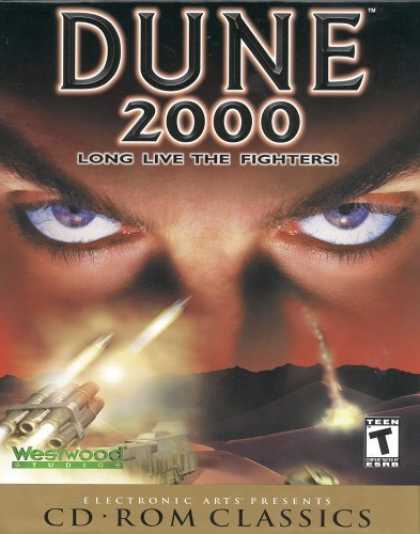
Dune 2000

Dune 2000 is a RTS developed by Westwood Studios and Intelligent Games and was released in 1998 on Windows and later ported on the Playstation. The game is based on Frank Herbert's Dune universe.

Emperor Corrino has issued a challenge that the House which can produce the most spice will control its source, the desert planet Dune, with no rules as to how the Houses can achieve the goal. However, when you're playing with the Harkonnen (the evil House), the Emperor will eventually team up with the Atreides and tries to destroy you, how ironic. Meanwhile, Lady Elara of the Bene Gesserit and bound concubine to the Emperor, secretly takes the commander (you) into one of the Heighliners, a person whose bloodline and future the Sisterhood had checked. According to Elara, they saw many visions of the commander dying many times and only in one vision does the commander live and even rise to control massive armies and bring peace to Arrakis.

I will explain the three Houses below, as taken from the intro.
House Atreides- Hailing from the water-planet of Caladan, the Atreides have a strict loyalty to their Duke and follow him with zeal. The Duke's famous Mentat, Noree Moneo, advises and resides over the Duke's forces on Arrakis. The House's fleets of ornithopters ensure their superior air power. The Duke also wishes to develop an alliance with the Fremen, the native warriors of Dune.
House Harkonnen- The Harkonnen are ruled by the wicked Baron and come from the volcanic waste-planet of Giedi Prime. According to Lady Elara, the only thing human about the Harkonnen is their genetic makeup, as all humanity was abandoned long ago in favor of brutality and maliciousness. The Baron's Mentat, Hayt De Vries, was born from the flesh of a dead man in the Tleilaxu Flesh Vats.
House Ordos- The Ordos originate from a frigid, ice covered planet unnamed in Dune 2000 but later called Sigma Draconis IV in Emperor: Battle for Dune. As they import their goods from nearby star systems, House Ordos relies on their skills as merchants to make their profits; however, their wealth has made them increasingly paranoid. According to the manual, House Ordos buys all of its units instead of constructing them themselves. Unlike the other two houses, House Ordos is not mentioned in any of Frank Herbert's Dune novels.
There are also four non-playable subfactions: House Corrino, the Fremen, the Mercenaries and the Smugglers.

Spice is the main resource in the game, which you have to collect with harvesters. It is advised to regularly check where your harvesters are, because there are always giant worms around, and those worms sometimes consume your harvester. You'll know that a worm is there when you see sparks coming out of the ground. With spice you can purchase everything ranging from infantry to building upgrades. Before placing a building you'll have to place concrete, because otherwise it's health is not at 100% but will decrease to a certain point over time. You'll also need to build energy sources, Wind Traps. If you don't have enough energy the training and building process is slowed down and your missile turrets and your radar won't operate. Your most valuable building is the Construction Site. If you lose this building you won't be able to construct other buildings, unless you're able to build or order a Mobile Construction Verhicle from a Starport. When playing the singleplayer campaign I recommend you to seek and destroy your enemy's Construction Site before destroying the other buildings, because otherwise they'll just rebuild the buildings they've lost.

Although each house has many common units, such as infantry, Wind Traps, and Mobile Construction Vehicles, each House also has its own set of units, such as the Atreides Sonic Tank, the Ordos Deviator and the Harkonnen Devastator. Houses Harkonnen and Atreides share the Trike, while House Ordos has an upgraded version, the Raider. Like many games of the Westwood franchise, a player can gain access to other Houses' special units by capturing an enemy building and manufacturing the desired units.

The graphics of this game aren't that special, but I think they're good enough for a game from 1998. There isn't really much to say about the level design, because you play on a desert planet and everything looks the same. This game received a lot of criticism from the hoax called GameSpot, because they thought the game's production value was 'drab' for 1998 standards. Whatever they thought, I, on the contrary, had a lot of fun with this game. I spend many hours playing this game, it can be very challenging at times.

Monday, May 24, 2010

Sins of a Solar Empire


Sins of a Solar Empire has been developed by Stardock and Ironclad Games.
Since its release, two micro-expansions have been released, Entrenchment and Diplomacy.
Entrenchment’s main focus was defence and introduces new ships, the ability of deploying mine fields and the option of building powerful starbases in the gravity belts of planets.
There’s not much to tell about the Diplomacy as it speaks for itself. It grants you the ability of making pacts with other factions.
The third micro-expansion hasn’t been announced yet, but will be the last one.

Sins of a Solar Empire is a mix between space-based RTS and a genre called 4X. 4X means that the player controls an empire and has to, and I quote, to explore, expand, exploit and exterminate. This game follows the rules of the 4X-genre for a big portion. At the beginning of a new game, your first tasks are building ships, scouting new planets and colonizing them, starting your economy and start research.

There are 3 factions you can play:
- the TEC, the Trader Emergency Coalition. Founded after the invasion of the Vasari and the Advent and is a cooperation between independent empires.
- The Vasari. It’s the only alien race in SoaSE. The Vasari were once a great civilization and expanded its empire by assimilating other civilizations. Because of hysteria on a galactic scale in the Vasari empire, a small colony fled the empire, eventually ended up in human territory. And in this territory they fight against the TEC and the Advent over resources.
- The Advent. Originally a religious sect, they were driven out before the rise of the TEC. This faction uses psychic powers to manipulate populations and to destroy their enemies.

The first downside of the game comes to light shortly after starting the game. That’s because the game doesn’t feature a campaign mode, which is a shame. The 3 factions have a long history together and a campaign could’ve made good use of that.

Your main resources are metal, crystal and credits. Metal and crystals can be harvested by placing mines on top of asteroids containing metal or crystal. Additional metal and crystal can be obtained by building refineries. Credits are created by planets and by trade stations. But these are the normal ways of obtaining the game’s resources, the other one is by selling or buying metal or crystal at the black market.

When you colonize a planet, the planet is unable to create credits due to the fact that they are under developed and suffers from operating costs. So instead of making credits it consumes its. For the planet to create credits, you first have to invest metal, crystal and credits into upgrading its infrastructure. Next to upgrading a planet’s infrastructure, you can also invest in increasing a planets hitpoints by building emergency facilities. Two other upgrades grants you the option of building more civilian and tactical structures in the planet’s orbit. And finally you can invest in exploring the planet for natural resources, relics etc.

Combat in Sins of a Solar Empire is slow. And by slow I mean it takes a while before a battle is over. That’s not only due to the fact that ships (not talking about the structures) have shields and armor that constantly recharges, but also because reinforcements can be brought in at all times. The galaxy never stops in Sins. Almost every frigate and cruiser has a special power to be used in combat. This can be to increase the damage output for a moment or to support other ships in battle.
Capital ships are the heavy guns in Sins. They can possess more than one ability. They are the only ships that can earn experience points and level up. Experience points are earned by destroying enemy ships in combat. Every faction has 5 ships to choose from ranging from all out combat ships to support ships.

The AI in Sins is pretty smart and get smarter in the expansions that followed. It can really be a pain, but it has an addiction. It seems that it can’t get enough of building countless frigates, while neglecting capitals and cruisers. But you won’t hear me complaining, this only gives impressive fleet battles and extends the amount of time you put into a single match.

I had a lot of fun playing this game and will continue in doing so. Though it lacks a campaign mode, it still is a solid RTS/4X game that will keep you busy for hours.
And for those planning to buy this game, Stardock has released Sins of a Solar Empire Trinity. It contains the original game and the two expansions, Entrenchment and Diplomacy.

Friday, May 21, 2010

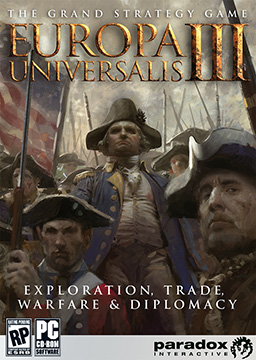
Europa Universalis III

Europa Universalis III is a historical strategy game made and released by Paradox Interactive in 2007. The game got three expansion packs: Napoleon's Ambition, In Nomine and Heir to the Throne. I myself own In Nomine.

Europa Universalis III is a very extensive game, just like Hearts of Iron III. You can choose from more than 250 nations that exist during the period of 1399-1820 (1453-1789 in the original game), including native American tribes, and try to establish a strong nation by conquering other nations by force or in a more diplomatic way by turning them into vassals.

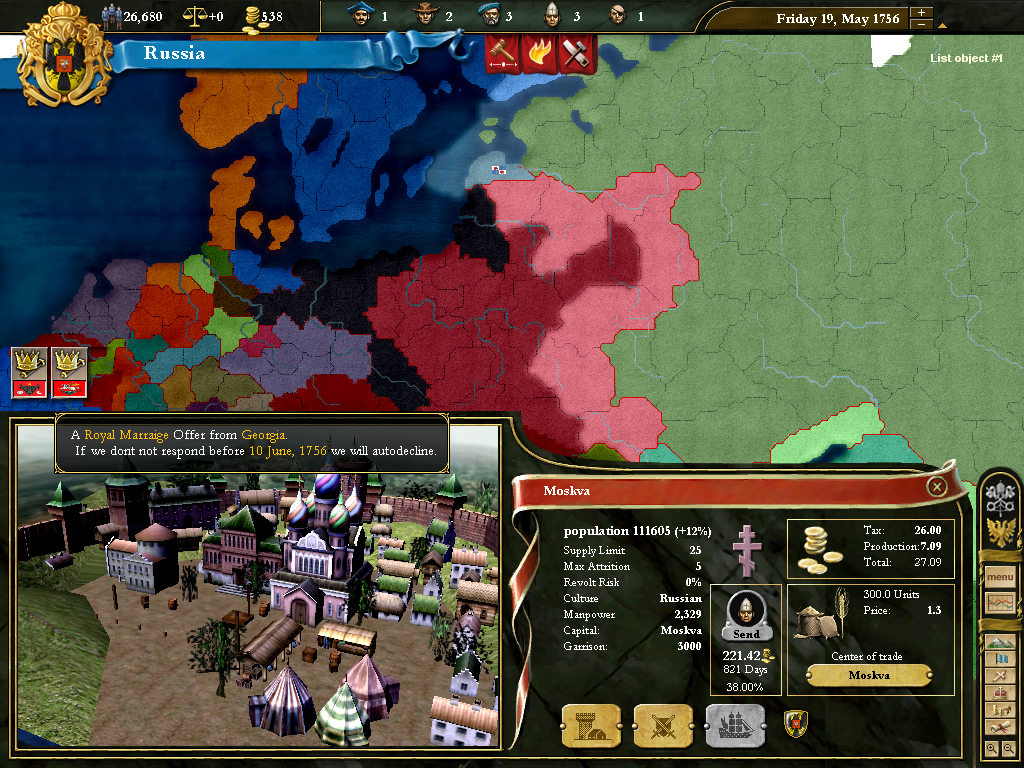
A very important aspect of the game is the market. You have to get a strong position in the centres of trade to get additional income. With more income you can create a larger army. You can also invest money in certain fields of expertise, in which you want your country to develop in. These sectors are: Government, trade, naval, land and stability. When you invest in government you'll unlock more government types such as a merchant republic, which improves trading efficiency. When you invest in naval, you'll unlock better ships and your colony range will improve so you can colonize further away from your closest port. When you invest in land, your army will fight better and you will be able to create more advanced units. When turbulent times are there (such as war) it is needed to invest in stability, because revolts can occur. There are different types of revolts. For example, when you conquer territory you can expect patriotic revolts in that province. You can also put the money in your treasure chest and invest nothing, which is best to do in the beginning since you have low income.

Another thing that is extremely important is to have diplomatic relations with other countries, such as a military alliance, trade agreement (which is an agreement that makes sure that the two nations don't compete with each other) or royal marriage (government type has to be a monarchy), which greatly improves relations. When you have a royal marriage with another nation you can also claim there throne, which gives you a casus belly against them. When you have a casus belly against an other nation you won't lose as much stability as you would without a casus belly, and thus it's extremely useful.

In the beginning of the game most territory is still Terra Incognita, which means that that area isn't discovered yet. If you want to explore these area's you'll need explorers (naval) and conquistadores (land). When a discovered province lies in your colonization range, you can send a colonist to colonize the province. This will give you a lot of prestige, which gives you some additional bonuses, such as more tax income and more yearly merchants. You'll also get prestige by winning wars and by completing missions, such as: Free the Dutch people in Zeeland or build a large army.

You can also choose one of the national ideas (only when you have a free slot, more will come available over time) which give you an additional bonus, such as a higher moral for your armies, so that they can fight longer. Another thing you have to do is to make national and regional decisions. National decisions mostly are laws, while regional decisions are building an embassy in a certain province to improve relations with another nation.

There is also a list of structures that you can build to improve the economy of a province, such as a fort or weapons manufacturer. Most of these structures are very expensive and you'll also need more advanced technology for better buildings.

There isn't really much to say about the graphics, since you're looking at a world map. When comparing it to the first two games in the series, the graphics have been improved and it is the first Europa Universalis game that is in 3D.

I really liked playing this game. I'm still playing it today, experimenting with different nations. It's a great game, but you really have to be into the genre.

Friday, April 30, 2010

Supreme Commander 2

This game has been developed by Gas Powered Games and released by Square Enix. The game has been brought out for the pc, but also for the Xbox 360. ( Don’t ask me why)

The story begins 25 years after the end of SC: Forged Alliance, the expansion of Supreme Commander, where the UEF, Cybran Nation and the Aeon Illuminate have formed an alliance. The story really revolves around the breakdown of that alliance, but in the end you will find out that all is saved. The campaign follows a chronological order, beginning with the missions of the UEF, then the Aeon and ending with the Cybrans. In the effort to connect the players with the main characters, they added personal histories and experiences to those characters. While it adds a little RPG into the game, but that all it does. Now the main characters, you will fight with their ACU and with them sitting in it. The main’s are Thalia Kael, who works for the Aeon, Ivan Brackman, is on the Cybran side, and last but not least the UEF commander Dominic Maddox. Throughout the game you will encounter a commander named Gauge. He’s the bad guy that tries to ruin the fragile alliance between the major factions.

A lot of gameplay features of SC are also present in SC 2. Like in SC every shell, missile or bomb fired never hits the same location. Again mass and energy are your main resources. Although this time they did things different and that’s not positive. You know get a steady income of mass and energy units instead of a stream. With this I mean that before you can construct a unit, you have to get a number of mass and energy. Where in SC you could queue a large number of units without looking at your economy, now you are forced to save units of mass and energy. My opinion is that this is a step down. It was an art in SC to get your economy stable and now you get a income system that has been made casual.

The maps in SC2 are smaller than the previous game. Instead of big maps we got maps that look great when you zoom out. Zoom in and you get a bit disappointed. To me, the maps feel empty.

Over to the units. In SC2 they threw away the concept of having T1/2/3 units and went to having a few basic units and more experimental units. Unlocking some basic units and experimental’s forces you to do research. This accounts for a lot of structures too. With research you can upgrade your basic units and structures, so they can do more damage, have more combat capabilities or are better protected. But for you to research something you have to amass research points. And to get them you need to build research centers. Very original, but let’s move on. To build your experimental units you first have to build gantries, for land and air experimental’s. Naval versions are build on water without gantry. Another thing they did was optimizing how your units merge into formation. A thing that I appreciate, because in SC you would see your units bumping against each other, eventually forming together in a sort of formation.

Well I really don’t have anything else to say about this game. I really liked the first one and waited long time to finally play this game. Now I have played it, I really think they took a step back. The maps are smaller, you have fewer units and the economy is messed up. But I wouldn’t say that it’s a bad game, it’s just a step back from a good game.